Practice · 7 min read
Chaturanga, honestly, most people are doing it wrong, including me for years
By Linzy · 20 October 2025
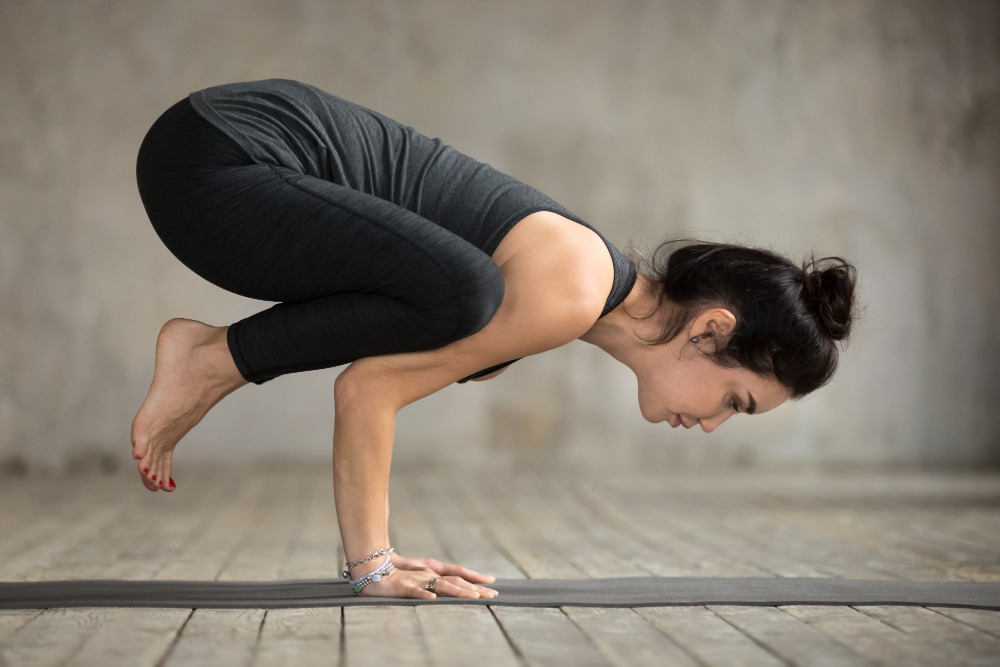
Chaturanga Dandasana, that half-push-up that bridges your sun salutations, is the single most common source of yoga injury I see. Rotator cuffs, AC joints, wrists, even the elbows. And it's nearly always because we treat it as a transition rather than a posture.
I taught it badly for the first three years of my career. So this isn't a lecture, it's a confession with notes.
What it actually is. Chaturanga is a plank held with the elbows bent to ninety degrees, shoulders stacked over wrists (or very slightly behind), elbows hugged tight to the ribs. Shoulder heads stay level with the elbows, never dipping below them. That last point is the one almost everyone misses.
Why it hurts people. When the chest drops below the elbows, the head of the humerus rolls forward in the socket and the front of the shoulder takes load it was never designed to bear. Do it 50 times a week for a year and you have an angry rotator cuff and possibly an impingement. A 2009 survey of yoga practitioners published in the International Journal of Yoga Therapy found the upper extremity, wrist and shoulder, accounted for the largest share of practice-related pain, with vinyasa-style practice the most common context (Fishman et al., 2009).
What to do instead.
Start from a high plank. Shift your whole body forward an inch so the shoulders move past the wrists. Then bend the elbows, keeping them brushing your ribs, and lower only as far as you can keep the shoulders level with the elbows. For most people, most days, that is not all the way down. That is the work.
If you can't hold the bottom for a full breath without the shoulders dipping, drop the knees. Please. The knees-down version is not a beginner pose, it's a strength-building pose, and most of us would benefit from a month of practising it that way exclusively. I still drop my knees when I'm tired or it's late in a class. There is no medal.
Three cues I steal from every good teacher I've trained with:
1. Spread your collarbones wide before you bend the elbows. It rotates the shoulder blades into the right position. 2. Press the floor away through the index-finger knuckles. It distributes the wrist load and keeps the elbow joint stacked. 3. Exhale on the way down, inhale into upward dog. Breath links the strength to the rhythm of the practice; without it, chaturanga is just a push-up.
If you take one thing from this, it's that strength built slowly stays. We have students at Deansgate Haus who've been practising for fifteen years and only floated into full chaturanga in the last two. The pose rewards patience like almost nothing else in the practice.
Come and play with it on your mat. I'll usually do a short technique cue at the top of Wednesday morning Hot Flow if you want to ask in person.
, Linzy
Linzy has been teaching yoga in Manchester for over twenty years. She founded Deansgate Haus in 2024. Drop in to one of her Wednesday Hot Flow classes if you'd like to ask anything from this post in person.