Body · 6 min read
Mobility is not stretching. Here's what I wish I'd known at 30.
By Linzy · 22 November 2025
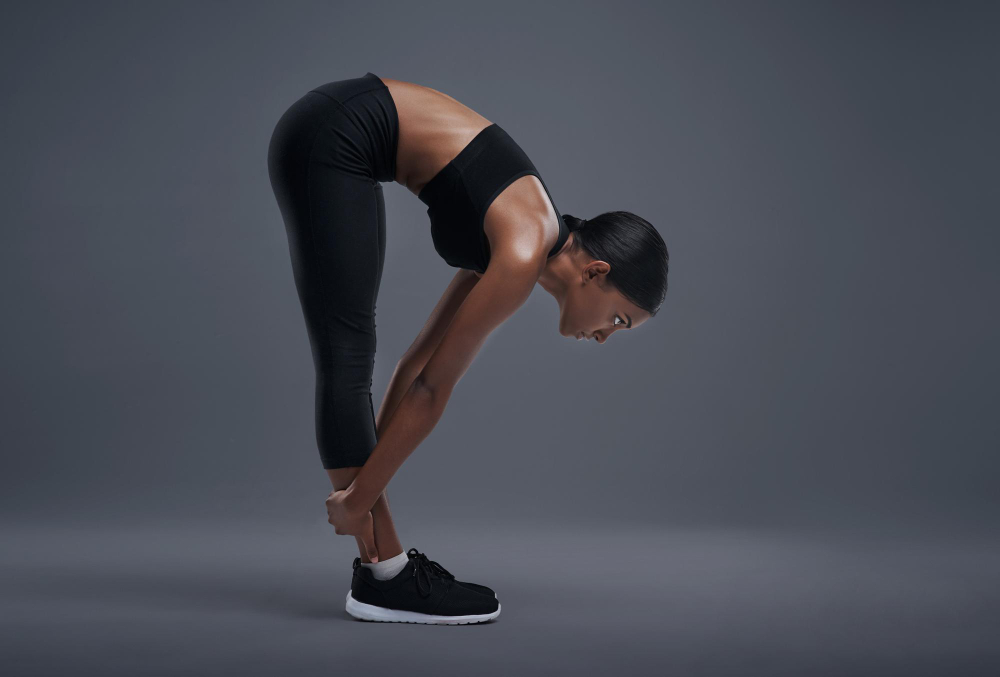
When I was thirty I could put my palms on the floor in a forward fold, no warm-up, no problem. I also couldn't get out of a deep squat without using my hands, and I'd tweaked my lower back twice in a year. Flexibility, it turns out, is not the same thing as mobility, and learning the difference is probably the single most useful thing that's happened to my body in the last decade.
Flexibility is the passive range a joint can be moved through, usually with gravity or a hand pulling it. Mobility is the range you can actively control with your own muscles, under load. The first one is a parlour trick. The second one is what keeps you out of physio.
This distinction has been central to the work of researchers like Dr Andreo Spina (the originator of Functional Range Conditioning) and is well summarised in joint-by-joint mobility frameworks now taught widely in physiotherapy, see for example the joint-by-joint approach popularised by Mike Boyle and Gray Cook which has shaped a generation of rehab practice.
Why does it matter for yoga? Because the postures we love most, pigeon, lizard, splits, deep backbends, are passive by nature. They lengthen tissue but they don't always teach you to control that new length. So we end up with people who can do the splits but can't lift their leg to standing height under their own steam. That's a mobility gap, and it's where injuries live.
Three things I'd add to any yoga practice:
End-range isometrics. Take any stretch you do regularly, say, a seated forward fold. After two or three minutes in it, try to actively contract the muscles being stretched (your hamstrings, in this case) against the floor for 10 seconds, twice. It feels strange. It tells the nervous system we own this range, and it's the single most evidence-supported way to convert passive flexibility into mobility.
Loaded hangs, deep squats, and dead hangs. The unfashionable trio. Five minutes of accumulated dead hang per week will do more for your shoulder health than almost any pose. Two minutes a day in a deep bodyweight squat will rebuild ankle and hip mobility that desk life has quietly stolen.
Move your joints through their full circles. Wrists, shoulders, hips, ankles. CARs (controlled articular rotations) take three minutes morning and night and they're the closest thing I've found to a free pension scheme for the body.
None of this replaces yoga. It just makes yoga safer and the gains stick around. We're starting to weave a 10-minute mobility primer into the start of Hot Flow on Tuesdays, drop in if you want to give it a go.
A small caveat: if you have hypermobility (and roughly 1 in 30 people do, women more than men, NHS overview here), the priority is even more on building strength at end-range, and less on chasing depth. Mention it to your teacher and we'll adapt.
, Linzy
Linzy has been teaching yoga in Manchester for over twenty years. She founded Deansgate Haus in 2024. Drop in to one of her Wednesday Hot Flow classes if you'd like to ask anything from this post in person.