Breath · 6 min read
The breath that changes the room
By Linzy · 4 November 2025
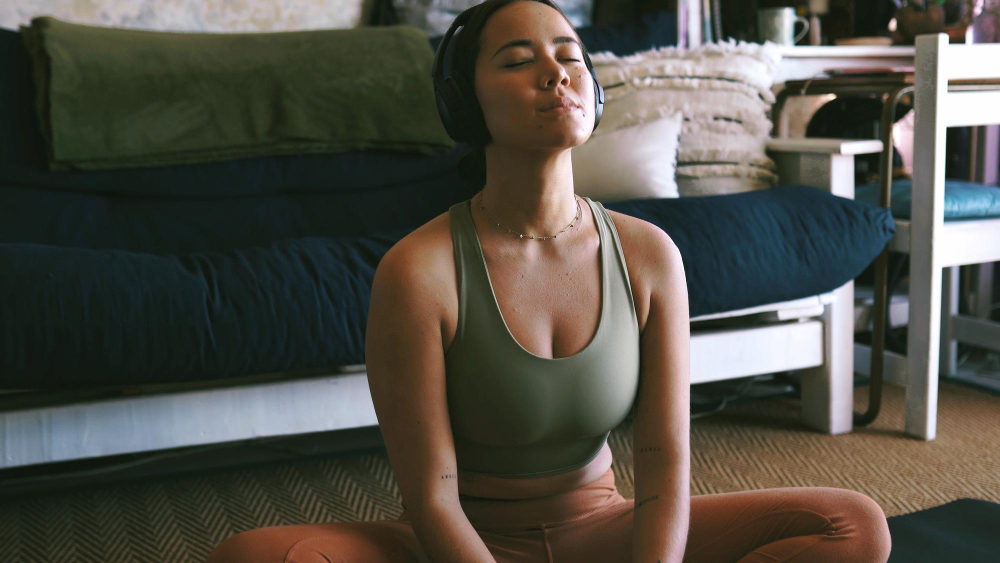
If you've ever been in a class where the teacher asked everyone to breathe in for four and out for six, and you noticed about ninety seconds in that the room had gone perfectly still, you've felt pranayama do its work.
I get asked whether the breathwork is "real" or whether it's just a calming ritual. It's real, and the evidence is now quite substantial. A long-running line of research from Boston University has shown that twelve weeks of yoga and coherent breathing practice (around five breaths a minute) is associated with measurable increases in thalamic GABA, the brain's primary inhibitory neurotransmitter, alongside reduced depressive symptoms in clinical populations (Streeter et al., Journal of Alternative and Complementary Medicine, 2010; follow-up Streeter et al., 2017). GABA is the same neurotransmitter that benzodiazepines work on. Yours, generated for free, by breathing.
The mechanism, very roughly: slow exhalations stimulate the vagus nerve, which signals the parasympathetic nervous system to lower heart rate, drop blood pressure and quieten the stress response. The 2018 review I keep coming back to (Zaccaro et al.) found this effect was most reliable when the exhalation was longer than the inhalation, and when the breath rate sat around 4-6 cycles per minute.
So if you take nothing else from this, make the out-breath longer than the in-breath. That's the whole technique. Everything else is decoration.
Three I use myself:
Box breathing (4-4-4-4). Inhale four, hold four, exhale four, hold four. Excellent before a difficult conversation or in the dentist's waiting room. Used by the US Navy SEALs which is funny but not the reason it works.
Coherent breathing (in 5, out 5). The one with the most research behind it. Easiest to do on a walk or lying down. Twenty minutes a day for a fortnight will change your sleep.
Bhramari, the bee breath. Inhale through the nose, then on the exhale make a low humming sound at the back of the throat with the lips gently closed. Sounds silly, feels extraordinary. The vibration stimulates the vagus nerve directly. I use it in restorative classes and in my own car when London traffic has got to me.
A note on safety: please don't do strong breath retentions if you're pregnant, have uncontrolled high blood pressure, glaucoma, or a history of panic attacks without speaking to your teacher and ideally your GP. Slow coherent breathing is universally safe. The fancier techniques are not.
We do a short pranayama practice at the start of every Yin and every Restore at the studio. If you've never done it formally, come into one of those, it's the gentlest place to begin.
, Linzy
Linzy has been teaching yoga in Manchester for over twenty years. She founded Deansgate Haus in 2024. Drop in to one of her Wednesday Hot Flow classes if you'd like to ask anything from this post in person.